

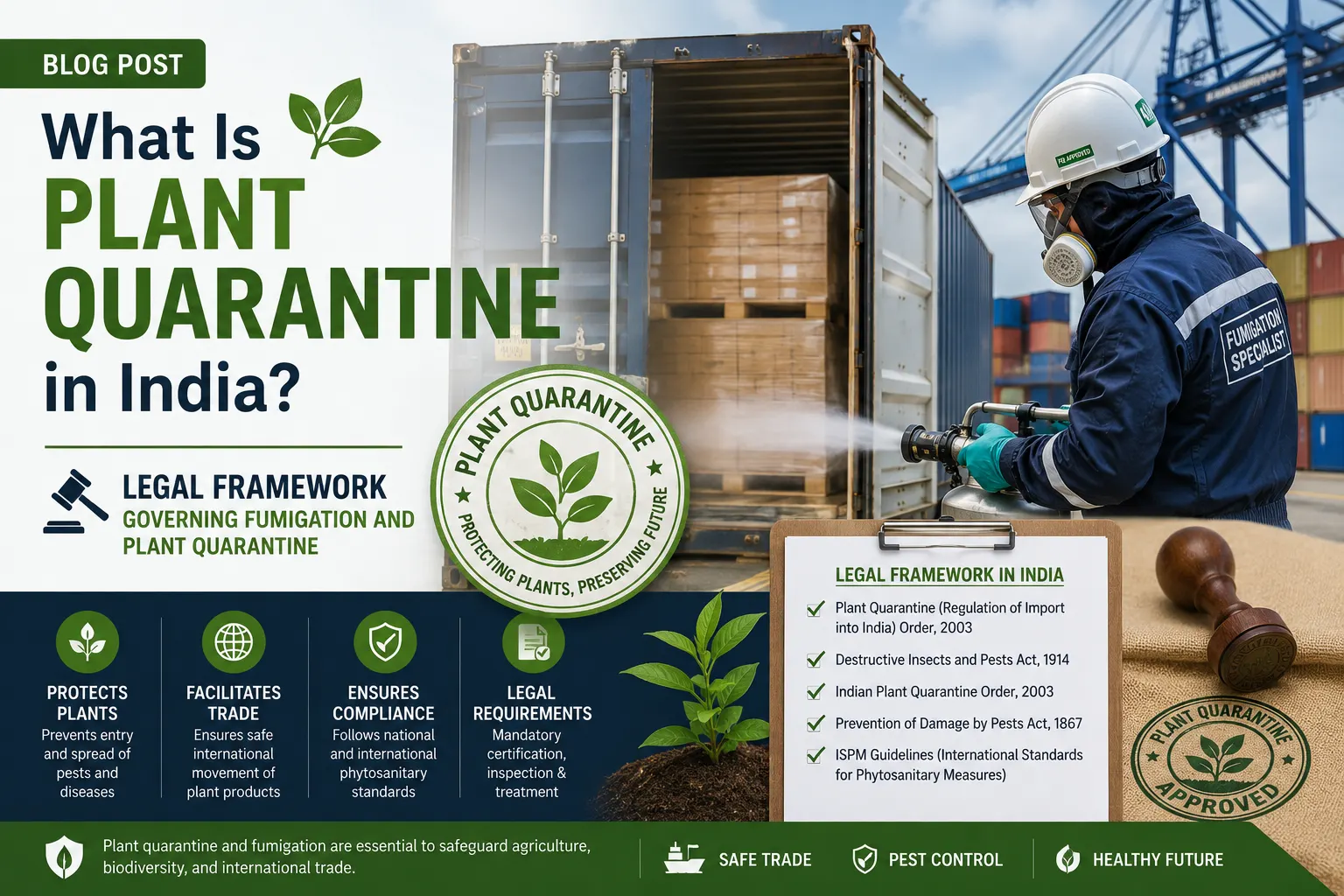
Plant Quarantine (PQ) & Fumigation Procedures in India
Complete guide for importers, exporters, freight forwarders and logistics professionals on Plant Quarantine regulations, fumigation procedures, ISPM-15 compliance, documentation and port clearance in India.
Contents
- What is Plant Quarantine?
- Legal Framework
- Import Procedures
- Export Procedures
- ISPM-15 Guidelines
- Safety Regulations
- Required Documents
- Major Indian Ports
- Benefits of Compliance
- FAQs
What is Plant Quarantine?
Plant Quarantine (PQ) is a regulatory system implemented to prevent the introduction and spread of harmful pests, insects, and plant diseases through international trade.
In India, Plant Quarantine is administered by the Directorate of Plant Protection, Quarantine & Storage (DPPQS) under the Ministry of Agriculture & Farmers Welfare.
- Prevent entry of invasive pests
- Protect Indian agriculture
- Facilitate safe international trade
- Meet international phytosanitary standards
Legal Framework Governing Plant Quarantine
- Plant Quarantine (Regulation of Import into India) Order, 2003
- International Plant Protection Convention (IPPC)
- ISPM-15 Standards for Wooden Packaging Material
These regulations apply to imports, exports, trans-shipment cargo and wooden packaging materials.
Import Plant Quarantine Procedures
Step 1 – Plant Quarantine Import Permit (PQIP)
Importers must obtain a Plant Quarantine Import Permit before shipment. The permit specifies inspection and treatment requirements.
Step 2 – Phytosanitary Certificate
A Phytosanitary Certificate issued by the exporting country’s NPPO is mandatory.
Step 3 – Inspection at Indian Ports
The cargo is inspected by Plant Quarantine Officers at ports such as Tuticorin, Chennai, JNPT and Mumbai.
Step 4 – Fumigation or Treatment
- Live pest infestation
- High-risk commodities
- Treatment specified in Import Permit
Common Fumigants
- Phosphine
- Methyl Bromide (Restricted)
Step 5 – Cargo Clearance
After successful fumigation and inspection, cargo is released. Non-compliant consignments may be re-exported or destroyed.
Export Plant Quarantine Procedures
1. Export Inspection Application
Exporters submit an application for Plant Quarantine inspection before shipment.
2. Inspection & Sampling
Cargo is inspected for pests, diseases and soil contamination according to importing country requirements.
3. Export Fumigation
Many countries require fumigation for:
- Rice
- Wheat
- Pulses
- Spices
- Oil Seeds
- Timber
- Wood Products
4. Phytosanitary Certificate
Once compliant, Plant Quarantine authorities issue the Phytosanitary Certificate required for export.
ISPM-15 Guidelines
| Requirement | Details |
|---|---|
| Applicable Material | Wooden Pallets, Crates & Dunnage |
| Approved Treatment | Heat Treatment (HT) or Methyl Bromide Fumigation |
| Marking | Official IPPC Stamp |
| Non-Compliance | Shipment Rejection or Re-export |
Safety Regulations
- Only DPPQS-approved fumigation agencies are permitted.
- Gas-Free Certificate is mandatory after fumigation.
- Port safety procedures must be followed.
- Advance permission is required for on-board fumigation.
Documents Required
- Plant Quarantine Import Permit / Export Application
- Phytosanitary Certificate
- Fumigation Certificate
- Gas-Free Certificate
- Treatment Report
- Shipping Documents
- Customs Documents
Major Indian Ports Handling Plant Quarantine Cargo
- Tuticorin (VOC Port)
- Chennai Port
- Nhava Sheva (JNPT)
- Kandla Port
- Kolkata Port
- Visakhapatnam Port
Why Compliance is Important
- Prevents shipment delays
- Avoids penalties
- Avoids cargo rejection
- Protects India’s agriculture
- Ensures smooth international trade
- Improves customs clearance
Frequently Asked Questions
Is fumigation mandatory for all imports?
No. Fumigation is mandatory only for regulated commodities or when pests are detected.
Who issues the Phytosanitary Certificate?
The Plant Quarantine Authorities under DPPQS issue the certificate.
Is ISPM-15 compulsory?
Yes. ISPM-15 compliance is mandatory for wooden packaging used in international exports.
Conclusion
Strict adherence to Plant Quarantine and fumigation procedures is essential for both importers and exporters. Understanding documentation requirements, inspection procedures and international standards ensures faster customs clearance, prevents shipment delays and supports safe global trade.